Gan Sze Hooi
Kampung Baru Culinary Shaping
Gan Sze Hooi
89 x 132cm (Open) & 89 x 66cm (Close)
Oil on Canvas & Pine Wood Frame
2025
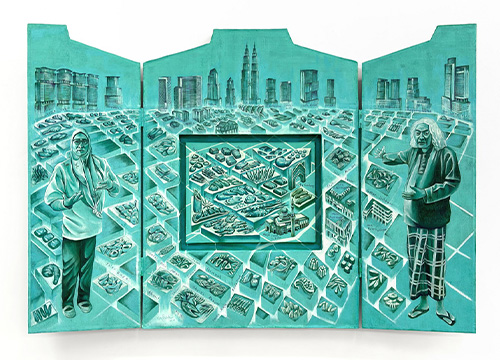
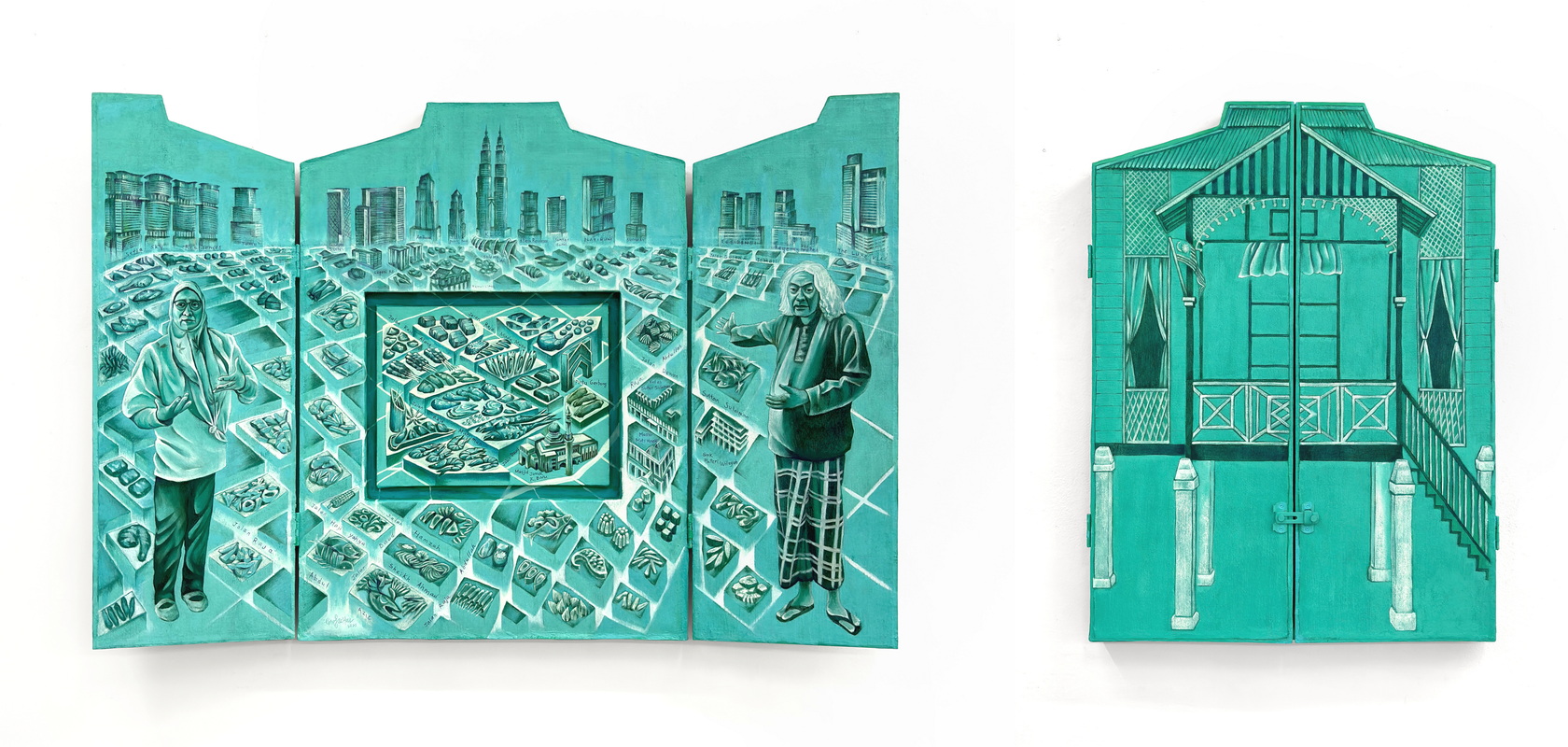
I joined a local tour to Kampung Baru many years ago and was struck by both its food and architectural heritage. The teal painting depicts Rumah Limas, an iconic traditional Malay stilt house on Jalan Raja Muda Musa in central Kuala Lumpur, now surrounded by skyscrapers. In the painting are Siti (left) and Fuad Fahmy (right). Fuad, a fourth-generation resident whose great-grandfather was the first imam of Masjid Jamek, works as a village tour guide, welcoming visitors. Siti, his wife, plans to host a “from garden to table” cooking workshop, using ingredients such as lemongrass and coconuts from their garden.
Each night, thousands flock to Jalan Raja Muda Musa for local dishes, satay from Restoran Sahrul, Nasi Lemak Wanjo, Pak Saf Sate Padang, Yati Murtabak Kampung Baru, Putu Bambu Raja Klang and more.
Kampung Baru Culinary Shaping
Gan Sze Hooi
89 x 132cm (Open) & 89 x 66cm (Close)
Oil on Canvas & Pine Wood Frame
2025
I joined a local tour to Kampung Baru many years ago and was struck by both its food and architectural heritage. The teal painting depicts Rumah Limas, an iconic traditional Malay stilt house on Jalan Raja Muda Musa in central Kuala Lumpur, now surrounded by skyscrapers. In the painting are Siti (left) and Fuad Fahmy (right). Fuad, a fourth-generation resident whose great-grandfather was the first imam of Masjid Jamek, works as a village tour guide, welcoming visitors. Siti, his wife, plans to host a “from garden to table” cooking workshop, using ingredients such as lemongrass and coconuts from their garden.
Each night, thousands flock to Jalan Raja Muda Musa for local dishes, satay from Restoran Sahrul, Nasi Lemak Wanjo, Pak Saf Sate Padang, Yati Murtabak Kampung Baru, Putu Bambu Raja Klang and more.

Girl in a Labyrinth of Food
Gan Sze Hooi
91 x 116.5cm
Oil on Canvas
2025
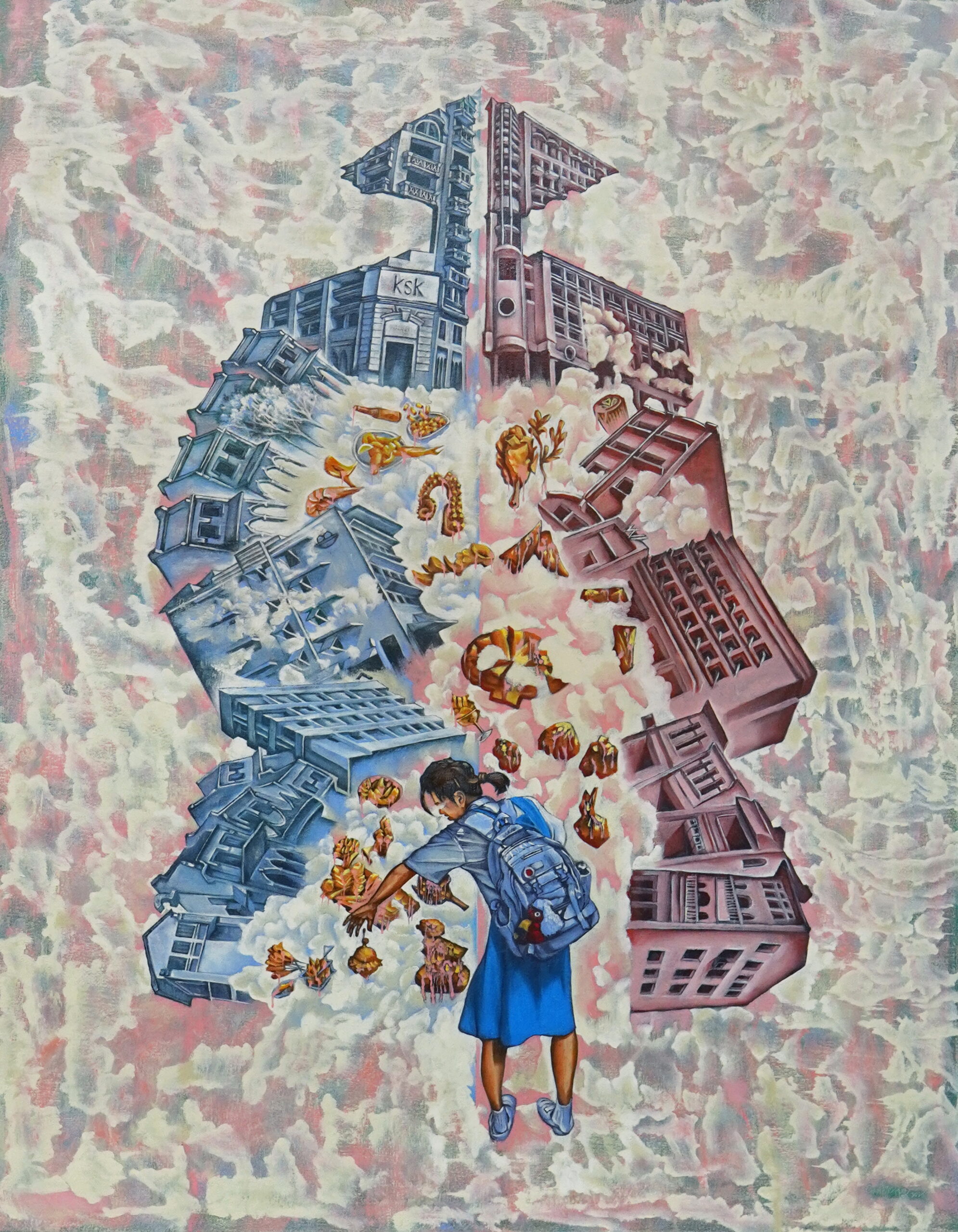
Inspired by the film Pan’s Labyrinth, this artwork reflects the tension between desire and restraint. The story follows a girl trapped in a maze without food, warned not to touch the feast before her. Unable to resist, she takes a few bites, unaware that the food is a secret test by an evil force. This cautionary tale parallels the dilemmas we face in modern life—navigating a world filled with temptations and hidden traps.
Through my exploration of mapping, I’ve come to realize that a map is a maze, and a maze is a map—both serve as metaphors for movement, decision-making, and abstract concepts of control and fate. These visual elements act as tools for constructing my artistic universe, bridging history, culture, and personal narratives.
At its core, this work questions whether we control our desires or if our desires control us. The labyrinth represents the path of life, where every choice leads us deeper into self-discovery or deception. In today’s world, many fall prey to materialistic enticements—advertisements, financial traps, and the illusion of wealth. This contrast is visually represented through color: the blue side symbolizes restraint and mindfulness, urging us to pause, while the red side embodies desire—where excitement, consumption, and indulgence dominate, particularly among younger generations.
By reinterpreting historical and cultural symbols, such as Kapitan Yap Ah Shak’s body shape, this work reflects how traditions, choices, and temptations shape our journey. The question remains—will we navigate wisely, or be consumed by the maze of desire?
Girl in a Labyrinth of Food
Gan Sze Hooi
91 x 116.5cm
Oil on Canvas
2025
Inspired by the film Pan’s Labyrinth, this artwork reflects the tension between desire and restraint. The story follows a girl trapped in a maze without food, warned not to touch the feast before her. Unable to resist, she takes a few bites, unaware that the food is a secret test by an evil force. This cautionary tale parallels the dilemmas we face in modern life—navigating a world filled with temptations and hidden traps.
Through my exploration of mapping, I’ve come to realize that a map is a maze, and a maze is a map—both serve as metaphors for movement, decision-making, and abstract concepts of control and fate. These visual elements act as tools for constructing my artistic universe, bridging history, culture, and personal narratives.
At its core, this work questions whether we control our desires or if our desires control us. The labyrinth represents the path of life, where every choice leads us deeper into self-discovery or deception. In today’s world, many fall prey to materialistic enticements—advertisements, financial traps, and the illusion of wealth. This contrast is visually represented through color: the blue side symbolizes restraint and mindfulness, urging us to pause, while the red side embodies desire—where excitement, consumption, and indulgence dominate, particularly among younger generations.
By reinterpreting historical and cultural symbols, such as Kapitan Yap Ah Shak’s body shape, this work reflects how traditions, choices, and temptations shape our journey. The question remains—will we navigate wisely, or be consumed by the maze of desire?
Artist Statement
Echoes of a Drowned Artery
Gan Sze Hooi
152.5 x 101.5cm
Oil on Canvas
2023
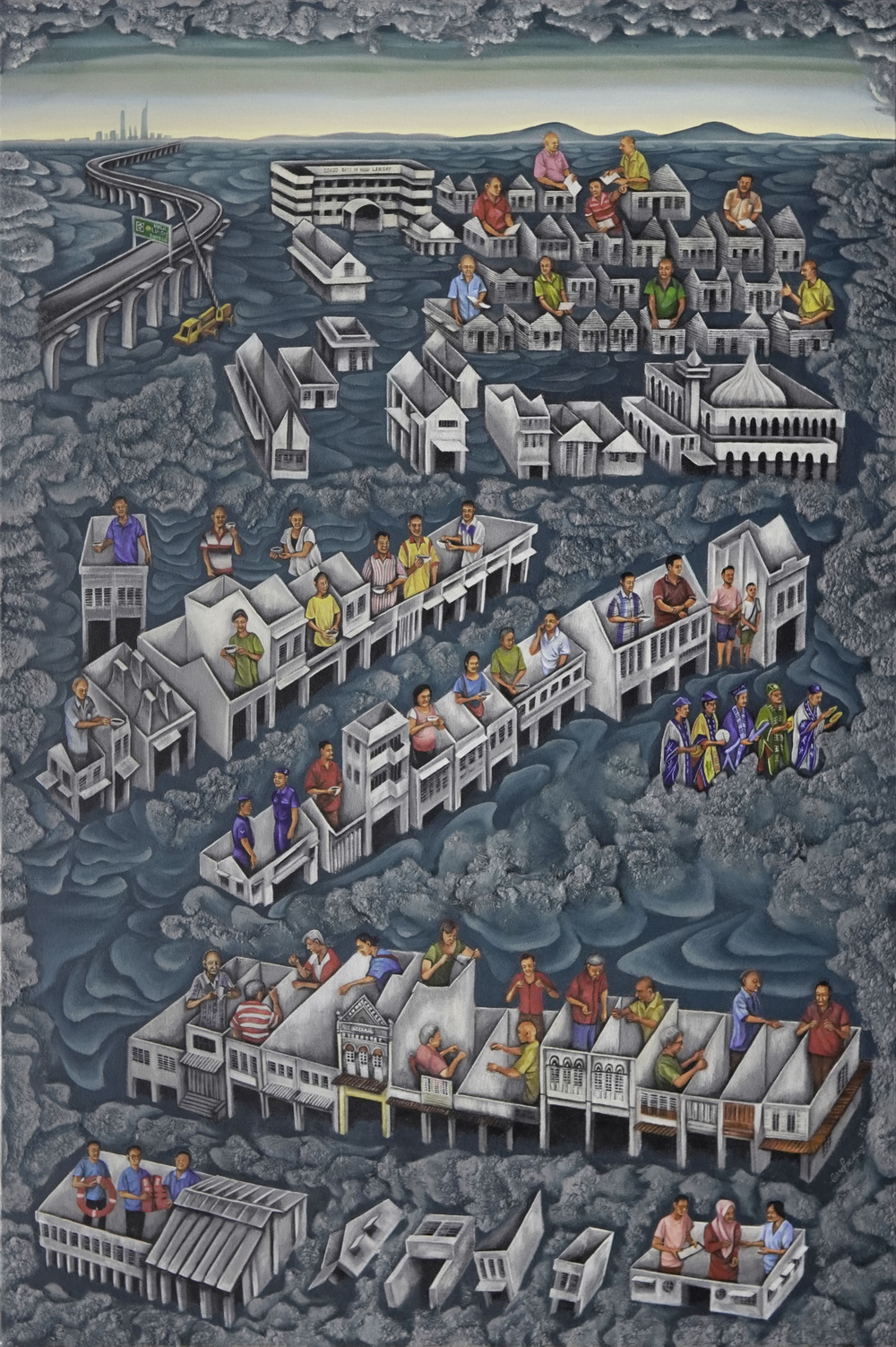
The painting reflects the silent disappearance of history as urbanization reshapes the landscape. Inspired by the submerged town and the lost heritage of Hulu Langat Batu 14, it symbolizes the gradual erosion of cultural identity and the irreversible effects of environmental change. The rising waters mirror the fate of old villages swallowed by modern development, where once-thriving tin mining communities and historic structures now fade into obscurity.
This work explores the tension between memory and progress, highlighting the struggle of past generations whose stories, like the currents of the Langat River, are slowly being washed away.
Echoes of a Drowned Artery
Gan Sze Hooi
152.5 x 101.5cm
Oil on Canvas
2023
The painting reflects the silent disappearance of history as urbanization reshapes the landscape. Inspired by the submerged town and the lost heritage of Hulu Langat Batu 14, it symbolizes the gradual erosion of cultural identity and the irreversible effects of environmental change. The rising waters mirror the fate of old villages swallowed by modern development, where once-thriving tin mining communities and historic structures now fade into obscurity.
This work explores the tension between memory and progress, highlighting the struggle of past generations whose stories, like the currents of the Langat River, are slowly being washed away.

The River and the Submergence
Gan Sze Hooi
152.5 x 101.5cm
Oil on Canvas
2023
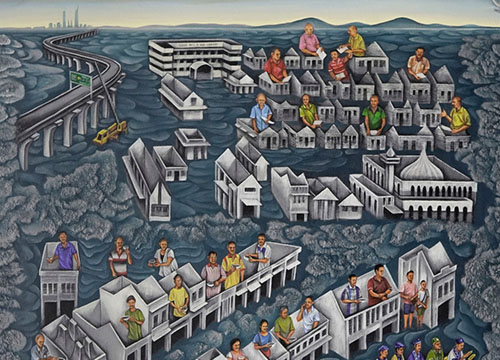
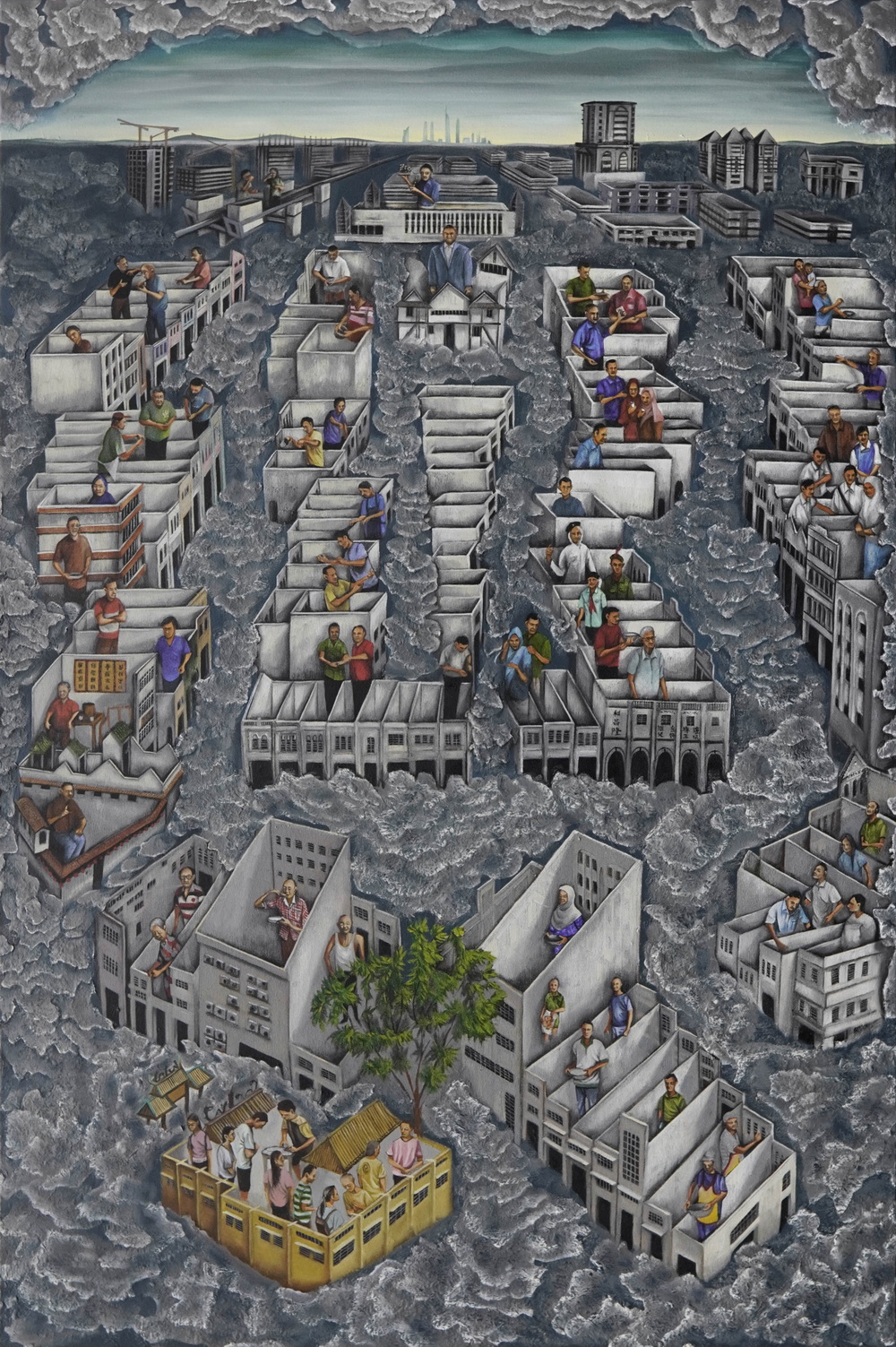
This painting captures the slow submersion of Kajang, where Floods engulf historic streets and landmarks, symbolizing the fragile coexistence between urban development and natural forces. Inspired by places such as Jalan Mendaling, Jalan Tukang, Jalan Tengah, Jalan Besar, and Jalan Sulaiman, the work reflects the impact of flooding and modernization on cultural heritage.
The rising waters echo the fate of Shen Sze She Yar Temple (仙四師爺宮), Ting Hong Sze Temple (鎮⽅寺), Kedai Ubat Kwong Chai Tong (廣濟堂), and Kedai Runcit Kwong Sang Woh (廣生和饼⼲店)—sites deeply rooted in Kajang’s history yet increasingly threatened by urbanization. The piece serves as a reminder of the delicate balance between nature, progress, and the preservation of historical identity.
The River and the Submergence
Gan Sze Hooi
152.5 x 101.5cm
Oil on Canvas
2023
This painting captures the slow submersion of Kajang, where Floods engulf historic streets and landmarks, symbolizing the fragile coexistence between urban development and natural forces. Inspired by places such as Jalan Mendaling, Jalan Tukang, Jalan Tengah, Jalan Besar, and Jalan Sulaiman, the work reflects the impact of flooding and modernization on cultural heritage.
The rising waters echo the fate of Shen Sze She Yar Temple (仙四師爺宮), Ting Hong Sze Temple (鎮⽅寺), Kedai Ubat Kwong Chai Tong (廣濟堂), and Kedai Runcit Kwong Sang Woh (廣生和饼⼲店)—sites deeply rooted in Kajang’s history yet increasingly threatened by urbanization. The piece serves as a reminder of the delicate balance between nature, progress, and the preservation of historical identity.